

How to Choose the Right Leather for a 2 Seater Leather Sofa
Sep 14, 2026
Leave a message
Choosing leather for a 2 seater leather sofa is not simply a matter of selecting a color or deciding whether the surface looks premium. For furniture wholesalers, retailers, hospitality projects and other bulk buyers, the leather specification affects product positioning, durability, maintenance requirements, appearance consistency and purchase cost.
Two sofas with a similar design can have very different performance depending on the leather used. For this reason, buyers should evaluate the upholstery material together with the intended application, expected usage, required appearance and target price rather than choosing leather based only on its visual appearance.
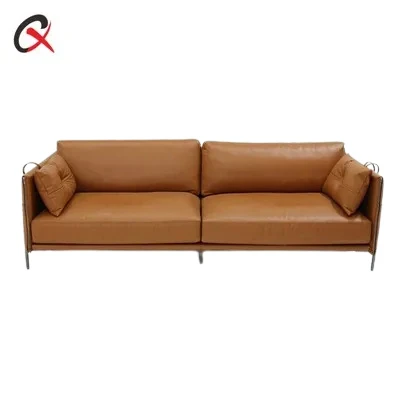
Why Leather Selection Matters in 2 Seater Sofa Procurement
A two-seat sofa has frequent contact with the user's body, especially around the seat, front edge, armrests and back cushions. These areas are exposed to repeated friction, bending, pressure and contact with skin, clothing and cleaning products.
For bulk buyers, an unsuitable leather specification can create several risks:
- Premature surface wear
- Color inconsistency between production batches
- Cracking or peeling after repeated use
- Difficult maintenance
- Inconsistent appearance across a furniture collection
- Higher replacement or after-sales costs
The right leather should therefore be evaluated as part of the complete sofa specification.
For example, Qiangxin's 2 Seater Leather Sofa is designed around a genuine leather upholstery system and a stable internal structure, with leather batches tested for tensile strength, wear resistance and color uniformity. This approach is more relevant to commercial procurement than evaluating leather only by touch or appearance.
Compare Leather Types Before Placing a Bulk Order
The term "leather sofa" does not identify one specific material. Buyers should request the exact leather category and finish from the supplier.
Full-Grain Leather
Full-grain leather retains the natural grain of the hide and generally provides a more natural appearance and aging characteristics. It is often selected for premium furniture where natural texture and long-term appearance are important.
However, natural grain can include visible variations, so buyers should confirm their tolerance for differences between hides before placing a large order.
Top-Grain Leather
Top-grain leather is also derived from the outer portion of the hide but may undergo surface correction and finishing to achieve a more consistent appearance.
For many furniture projects, it can provide a practical balance between appearance, flexibility, durability and cost.
Corrected-Grain Leather
Corrected-grain leather receives more surface treatment to create a more uniform appearance. This can be useful when consistent color and surface appearance are important for a furniture collection.
However, buyers should evaluate the specific finishing system rather than assuming that all corrected-grain leather has the same performance.
Split or Bonded Leather
These materials should be clearly distinguished from higher-grade leather when preparing product specifications.
If a supplier simply describes a material as "genuine leather" without identifying the actual construction and finish, the buyer should request a detailed material specification before comparing quotations.
The key point is that "genuine leather" alone is not enough information for a professional bulk purchase. Buyers should ask what part of the hide is used, how the surface is finished and where each leather specification is applied.
Match Leather Performance to the Intended Application
There is no single leather specification that is automatically suitable for every 2 seater sofa.
The application should determine the priority.
Residential Furniture
For residential furniture, buyers may prioritize:
- Soft hand feel
- Natural appearance
- Comfort
- Color selection
- Easy daily maintenance
A premium natural-looking leather can be appropriate when the product is positioned toward the mid-to-high-end residential market.
Hotel and Hospitality Furniture
Hospitality furniture normally requires greater attention to repeated use, cleaning and appearance consistency.
For these projects, buyers should pay particular attention to:
- Abrasion resistance
- Surface protection
- Color consistency
- Cleaning requirements
- Commercial-use performance
- Relevant fire or compliance requirements
Office and Reception Furniture
Office and reception sofas need to balance appearance with repeated daily use.
A leather finish that is easy to maintain and sufficiently resistant to regular contact may be more practical than choosing the most natural-looking leather regardless of cost.
Therefore, the right question is not:
"Which leather is the highest grade?"
It is:
"Which leather specification provides the required performance for this application at the target cost?"
That distinction is particularly important for wholesale and project procurement.
Check the Leather Specifications That Affect Product Performance
Before approving a leather sample, buyers should request technical information rather than relying entirely on product photos.
Thickness
Leather thickness can affect hand feel, flexibility and upholstery behavior. However, thickness alone should not be treated as a complete measure of quality.
A thicker material is not automatically better if the finishing system, flexibility or overall construction is unsuitable for the sofa.
Tensile Strength
Tensile strength helps indicate how the material responds to pulling forces.
For sofa upholstery, this matters because leather is stretched and secured around the frame during production and experiences additional tension during use.
Abrasion Resistance
The seat area is repeatedly exposed to friction. Buyers supplying commercial or high-traffic environments should pay particular attention to abrasion performance.
Color Uniformity
For bulk orders, color consistency can be as important as durability.
A small difference between leather batches may become highly visible when multiple sofas are displayed together in a showroom, hotel or commercial project.
Surface Finish
The finish influences:
- Appearance
- Touch
- Stain resistance
- Cleaning requirements
- Aging behavior
Therefore, buyers should evaluate both the leather substrate and its surface treatment.
Evaluate Leather Samples Before Mass Production
A leather swatch should be treated as a procurement tool, not simply a color sample.
Before approving a material, buyers should check:
Appearance: Is the grain pattern consistent with the intended product positioning?
Touch: Does the leather have the required softness and flexibility?
Color: Does the color remain consistent under different lighting conditions?
Surface: Are there visible coating defects, uneven finishing or excessive artificial texture?
Flexibility: Does the material bend smoothly around corners and upholstery areas?
Performance: Does the supplier provide relevant test information for tensile strength, abrasion resistance and color consistency?
For larger orders, buyers should also confirm whether the approved sample will become the production reference.
This helps reduce disputes caused by differences between the original sample and subsequent production batches.
Consider Maintenance, Appearance and Long-Term Use
Leather selection also affects after-sales requirements.
A sofa placed in a residential environment may have very different maintenance requirements from one used in a hotel lobby or office reception area.
Buyers should therefore ask the manufacturer:
- What cleaning method is recommended?
- Is direct sunlight a concern?
- What type of maintenance is required?
- How should spills be handled?
- Is the surface suitable for frequent cleaning?
- Are there specific environmental conditions to consider?
Qiangxin provides maintenance guidance for its leather sofas, including daily cleaning recommendations, protection from prolonged sunlight and regular maintenance practices.
This information can also be incorporated into the product documentation supplied to retailers or project customers.
Balance Leather Quality Against Total Purchase Cost
For bulk buyers, the lowest leather price is not necessarily the lowest total procurement cost.
A cheaper upholstery material may reduce the initial quotation but create additional costs through:
- Higher replacement rates
- Customer complaints
- Inconsistent appearance
- Additional maintenance
- Shorter product service life
- Difficult after-sales handling
Instead of comparing leather only by price per unit, buyers should compare the complete specification:
Leather type + finish + performance + appearance + application + expected service life + maintenance requirements
This gives procurement teams a more meaningful basis for supplier comparison.
For a 2 seater leather sofa, the leather should also be evaluated together with the frame, cushioning and upholstery workmanship. A good leather specification cannot compensate for poor structural support or inadequate manufacturing quality.
Why Qiangxin Is Suitable for Customized 2 Seater Leather Sofas
Haining Qiangxin Furniture Co., Ltd. approaches sofa production from a manufacturing and customization perspective rather than offering only fixed retail designs.
Its 2 Seater Leather Sofa uses genuine leather upholstery, while the company states that leather batches are tested for tensile strength, wear resistance and color uniformity. The product also uses a solid wood internal frame and undergoes load-bearing testing before proceeding through production.
Qiangxin also provides customized options covering materials, colors and dimensions, allowing buyers to adjust the sofa specification according to different markets and project requirements. Its broader sofa business integrates R&D, manufacturing, sales and after-sales service.
For buyers sourcing private-label, wholesale or project furniture, this allows the leather specification to be considered together with the overall sofa design rather than treated as an isolated material purchase.
Buyer Checklist for Selecting Leather
Before confirming a bulk order, buyers can use the following checklist:
- Confirm the exact leather type.
- Confirm whether the leather is used on all upholstered surfaces.
- Request a physical leather swatch.
- Check color and grain consistency.
- Review thickness and relevant performance data.
- Ask about abrasion and tensile performance.
- Confirm the surface finishing system.
- Check cleaning and maintenance requirements.
- Confirm the approved sample as the production reference.
- Clarify acceptable natural leather variations.
- Confirm customization options for color and material.
- Evaluate leather together with the sofa frame and cushioning.
- Request production quality-control information before mass production.
A professional supplier should be able to explain not only what leather is being used, but also why that specification is appropriate for the intended sofa and market.
FAQ
Q: What Is The Best Leather For A 2 Seater Leather Sofa?
A: The best leather depends on the application, target price and expected usage. Buyers should compare leather type, finish, durability, appearance and maintenance requirements rather than selecting material by grade alone.
Q: What Leather Specifications Should Bulk Buyers Request?
A: At minimum, request the leather type, finish, thickness, color specification and relevant performance data such as abrasion, tensile strength and color consistency.
Q: Can The Leather Color And Material Be Customized?
A: Yes. Qiangxin states that it supports customization of sofa materials, colors and sizes according to customer requirements.
Q: How Can Buyers Verify Leather Quality Before Mass Production?
A: Request physical swatches and relevant test information, then approve a production reference sample before bulk manufacturing.
Q: Is Genuine Leather Suitable For Commercial Sofas?
A: It can be, provided the selected leather specification matches the expected traffic, cleaning conditions and project requirements. Commercial buyers should evaluate performance rather than relying only on the term "genuine leather."