

A complete analysis of China's furniture export bases and representative brands
Apr 24, 2025
Leave a message
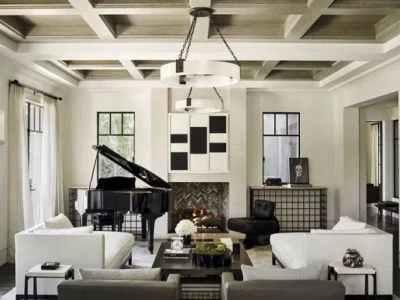
A complete analysis of China's furniture export bases and representative brands
Introduction
As a major furniture manufacturing and exporting country in the world, China has a complete industrial chain and multiple specialized industrial clusters. From Dalingshan Town, Guangdong in the south to Jiaoxi Town, Shandong in the north, from the sofa industry in Haining, Zhejiang to the chair industry hometown in Anji, these regions have become important furniture supply bases in the international market with their location advantages, policy support and industrial agglomeration effects. This article sorts out the development history, industrial characteristics and representative brands of China's major furniture export bases to show their global competitiveness.
Overview of China's furniture export bases
2.1 Dalingshan Town, Dongguan City, Guangdong Province: China's No. 1 Furniture Export Town
Geographic location and status:
Dalingshan Town is located in the south-central part of Dongguan City, adjacent to Hong Kong and Macao. In 2004, it was awarded the title of "China's No. 1 Furniture Export Town" by the China Furniture Association. It is one of the largest furniture production bases in the Asia-Pacific region.
Industrial ecology:
The industrial chain is highly integrated, covering board processing, hardware accessories, paint supply (such as Akzo Nobel, Lili Paint) and large timber markets (Jilong Timber Market). The town gathers more than 1,800 enterprises, with 300 independent brands, 5 national high-tech enterprises, and 13 Guangdong Province famous brand products.
Innovation and planning:
Through the construction of the "Dongguan Furniture Brand Creative Park", it promotes the gathering of corporate headquarters and brand incubation, aiming to create a national furniture design center and export hub.
2.2 Jiaoxi Town, Qingdao City, Shandong Province: Northern Furniture Export Industrial Base
Development History:
In 2011, it was awarded the title of "China Northern Furniture Export Industrial Base". Relying on the port advantages of Qingdao, it has formed an industrial cluster with wooden furniture as the core.
Industrial Support:
The park has a wood product testing center and a furniture vocational training college (cooperated with Northeast Forestry University). Among the more than 170 furniture companies, 26 are large-scale enterprises, and their products are mainly sold in the European and American markets.
Policy Support:
The Shandong Provincial Government has listed it as a "furniture export safety supervision demonstration zone" to strengthen quality supervision and international standards.
2.3 Haining City, Zhejiang Province: China Export Sofa Industrial Base
Industry Features:
In 2011, it was awarded the title of "China Export Sofa Industrial Base". Its products include leather sofas, functional sofas, outdoor furniture, etc. The export volume accounts for one-third of the city, and North America is the main market (accounting for more than 70%).
Data highlights:
In 2010, the export volume reached 854 million US dollars, and 18 companies exported more than 10 million US dollars. In 2014, the sofa export volume accounted for half of Zhejiang Province, becoming the leader in sofa export among county-level cities in the country.
Competitiveness:
With a complete supply chain and the ability to respond quickly to the international market, Haining sofas occupy the mid-range market in Europe and the United States with high cost performance.
2.4 Anji County, Zhejiang Province: China's Chair Industry Home
Global Chair Industry Center:
In 2003, it was awarded the title of "China's Chair Industry Home", and its annual output of office chairs accounts for one-third of the country, and is exported to more than 190 countries and regions around the world.
Industrial upgrading:
Among more than 700 chair companies, leading companies such as Yongyi Co., Ltd. and Henglin Home Furnishing lead technological innovation and promote high-end products through the "Anji Chair Industry Cup" design competition.
Export contribution:
In 2017, the chair industry exported 15.2 billion yuan, accounting for 71.4% of the county's total exports, forming a new growth point with healthy office and smart home as the direction.
Inventory of representative brands of Chinese furniture exports
3.1 Representative brands of Dalingshan Town
Federal Furniture:
Famous for its modern solid wood furniture, its products are exported to Southeast Asia, the Middle East, Europe and the United States, and its designs combine oriental aesthetics with international trends.
Minwah Holdings (Chivas):
A global leader in the field of functional sofas, with a leading market share in the United States for many years, and the Dalingshan base is one of its core production bases.
3.2 Representative brands of Jiaoxi Town
Yimu Group:
One of the largest solid wood furniture exporters in the north, focusing on American and European styles, FSC certified, and environmental standards that meet European and American needs.
3.3 Representative brands of Haining City
Carson International:
A global sofa manufacturing giant, providing ODM services to international retailers such as Costco and IKEA, with an annual export volume of over US$500 million.
Morong Home:
Focusing on high-end functional sofas, a New York Stock Exchange-listed company, with a North American market share of over 60%.
3.4 Representative brands of Anji County
Yongyi Co., Ltd.:
The first listed company in China's office chair industry, cooperating with Staples, IKEA, etc., with R&D investment accounting for more than 5%, and has obtained many international patents.
Henglin Home Furnishing:
One of the world's largest office chair manufacturers, with an annual production capacity of more than 20 million chairs. In 2020, it acquired Switzerland's Lista Office to enter the European market.
Summary and Outlook
The rise of China's furniture export base is due to industrial clustering, brand internationalization and precise policy support. In the future, in the face of international trade barriers and upgraded environmental protection requirements, each base needs to further promote intelligent production, green material application and original design capabilities, and transform from "manufacturing highland" to "brand highland". At the same time, through cross-border e-commerce and overseas warehouse construction, Chinese furniture companies are expected to occupy a more core position in the global value chain.